
Pressure and vacuum sewer networks – Otopeni
About 2,400 m of DN 280 pressure sewer and a vacuum sewer network of around 15,000 m, installed without open-cut excavation.
View case study →Yes, gravity sewers can be installed by horizontal directional drilling. We track the grade in 0.01% steps along the whole length of each section.


In short: many designers and contractors assume gravity sewers can only be built by open-cut excavation. With the right equipment and method, a gravity main is installed by HDD between manholes, at the designed grade.
In a gravity sewer, wastewater flows only because of the slope. A deviation of a few centimetres along a section can create reverse slopes where sediment settles and, over time, blockages form. That is why the bore must be steered far more precisely than for a pressure pipe.
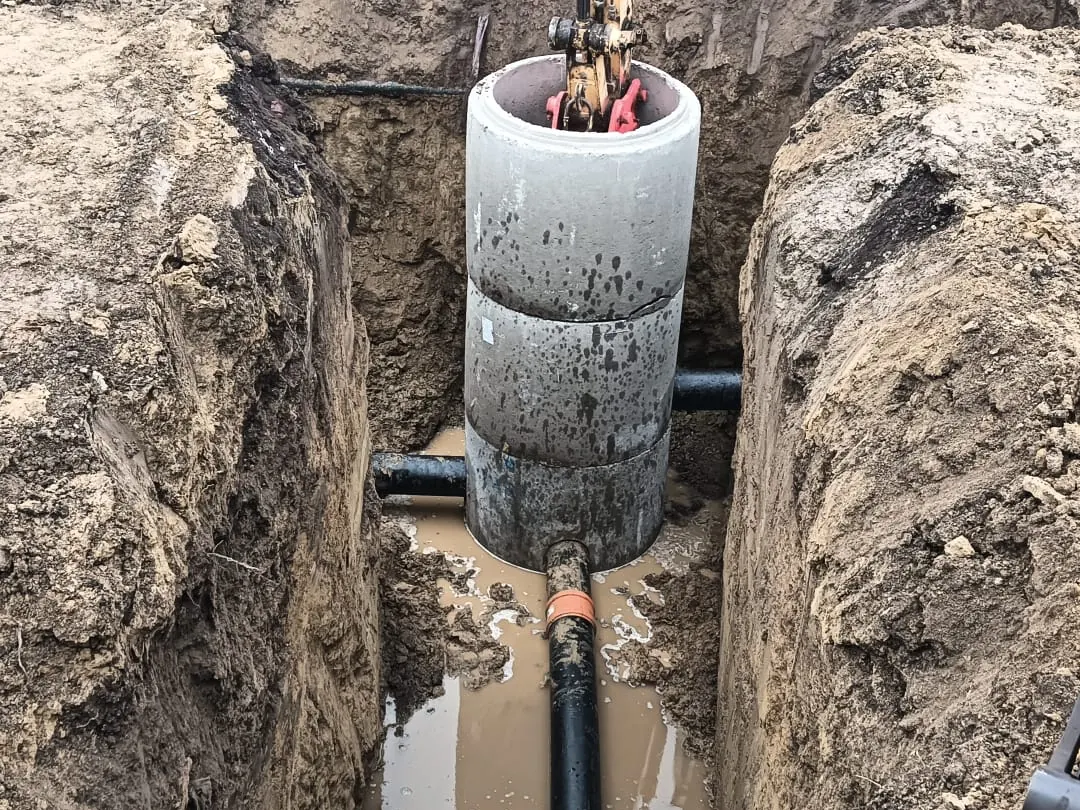
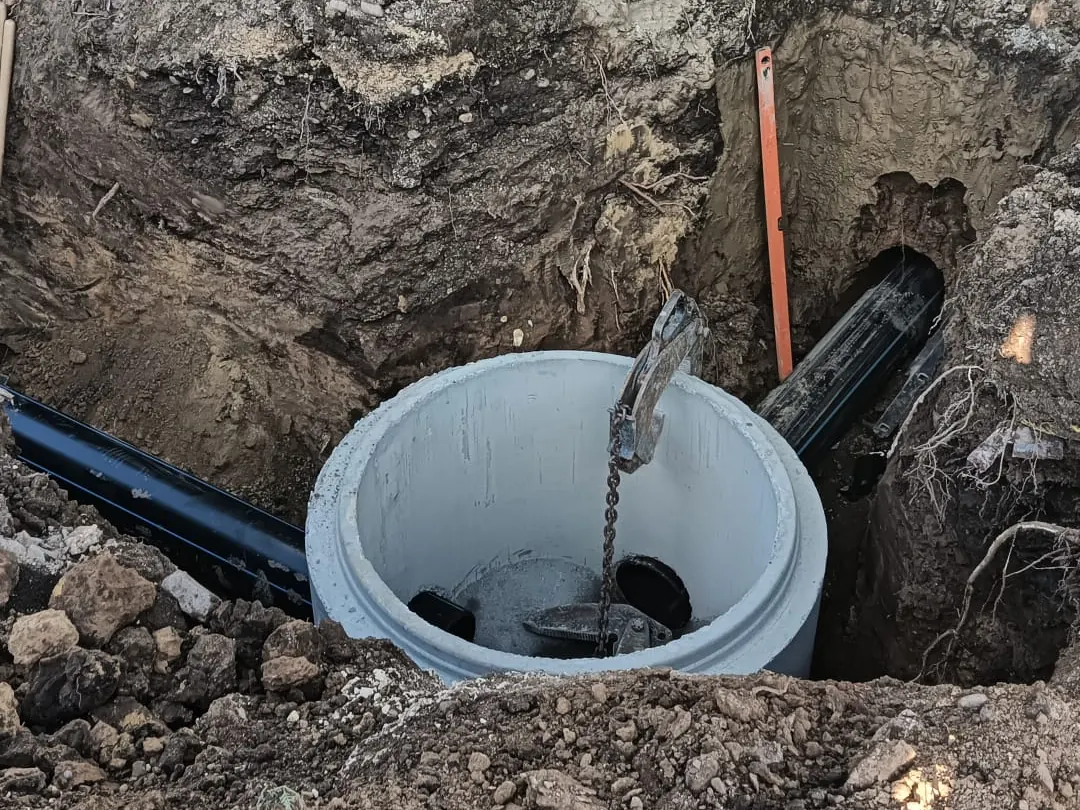
Besides gravity networks we install rising mains and vacuum sewer networks – the right choice for flat areas. A current example is Otopeni, with about 15,000 m of vacuum sewer and 2,400 m of DN 280 pressure sewer.
Yes. With precision guidance and an adapted method, gravity mains are installed by HDD between manholes, with the design grade tracked in 0.01% steps.
We work to the grades in the design. Tracking precision of 0.01% lets us build the small grades designers use in flat areas.
Usually the distance between two manholes – from a few dozen to over a hundred metres.
The as-built profile with levels measured along the route, ready to attach to the handover documents.
About 2,400 m of DN 280 pressure sewer and a vacuum sewer network of around 15,000 m, installed without open-cut excavation.
View case study →Send us the drawings and get a firm quote. Feasibility review is free.